By: New Delhi Chronicle Political Bureau
Date: April 17, 2026NEW DELHI
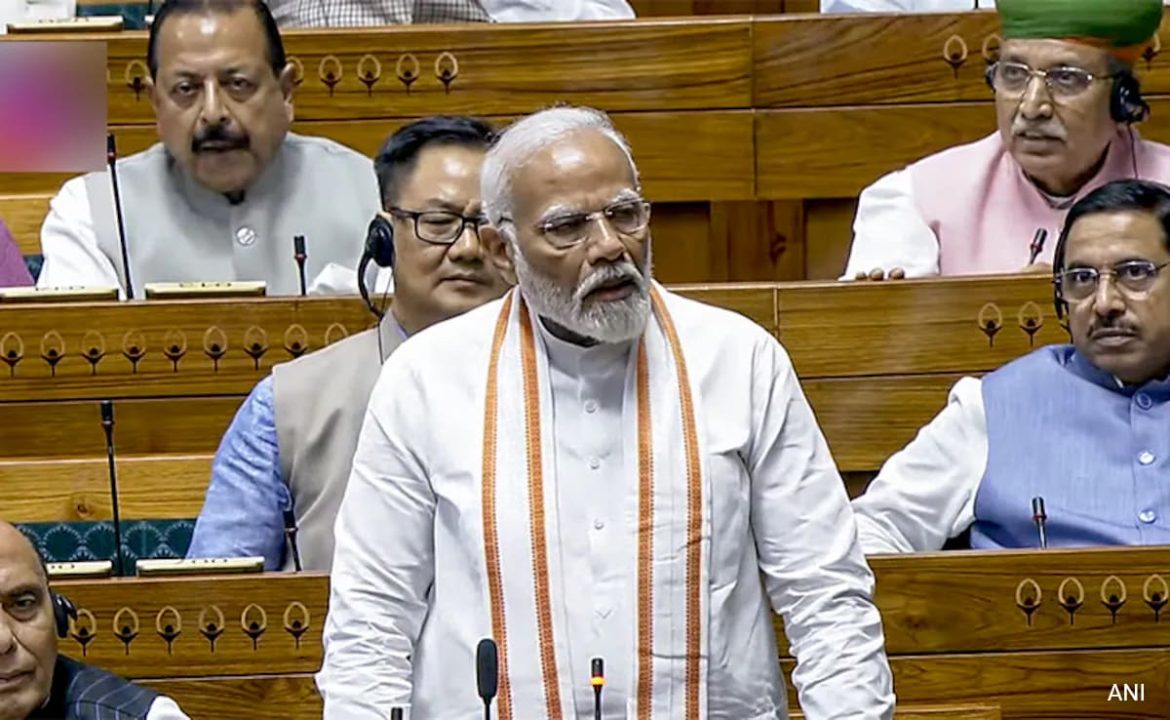
In a high-stakes legislative showdown, Prime Minister Narendra Modi on Friday made a poignant, emotional appeal to all political parties to support the Women’s Reservation Bill 2026. The appeal comes at a critical juncture as the ruling National Democratic Alliance (NDA) finds itself short of the “magic number” required to pass the constitutional amendment in the Lok Sabha.
The Numbers Game: NDA Faces an Uphill Task
The passage of the Constitution (One Hundred and Thirty-First Amendment) Bill, 2026, requires a two-thirds majority of the members present and voting. Currently, with a full house of 540 MPs, the government needs 360 votes.
However, the NDA’s current strength stands at 293, leaving a significant deficit of 67 votes. With over 230 Opposition MPs signaling their intent to vote against the current version of the bill—citing concerns over the linked Delimitation exercise—the Prime Minister has turned to moral persuasion to bridge the gap.
‘Think of Your Mothers’: PM’s Emotional Pitch
Taking to social media platform X (formerly Twitter) ahead of the crucial vote, PM Modi urged lawmakers to listen to their conscience.
“I appeal to all members… Please reflect upon your conscience, remembering the women in your own families,” the Prime Minister wrote. “Crores of women are watching our intent and our decisions. Let us not deprive our Nari Shakti of their rightful due in the decision-making process.”
The Prime Minister emphasized that the government has addressed all “misconceptions” and “information gaps” regarding the bill during a marathon debate that stretched until 1:00 AM the previous night.
What the 2026 Women’s Reservation Bill Proposes
The legislative package introduced on Thursday consists of three pivotal components:
1. The Constitution (131st Amendment) Bill: To provide 33% reservation for women in the Lok Sabha and State Assemblies.
2. The Delimitation Bill: To redraw and increase Lok Sabha constituencies to a projected 850 seats.
3. Union Territories Laws (Amendment) Bill: To extend these reservations to Delhi and Jammu & Kashmir.
Ending Decades of Political Stagnation
The push for women’s quota in India’s top legislative bodies has been a point of contention for nearly four decades. PM Modi stressed that the era of political “delay tactics” must end.
“For 40 years, politics has been played on this issue. It is not right that half of our population remains minimally represented in Parliament after 75 years of independence,” he added.
The Opposition’s Stand
While most parties agree with the principle of women’s reservation, the sticking point remains the Delimitation Bill. Opposition leaders argue that the redrawing of constituencies based on population could unfairly disadvantage Southern states that have successfully implemented population control. They have demanded a “clean” reservation bill decoupled from the delimitation process.
As the Lok Sabha prepares for the division of votes, the eyes of the nation