By International Desk
New Delhi Chronicle
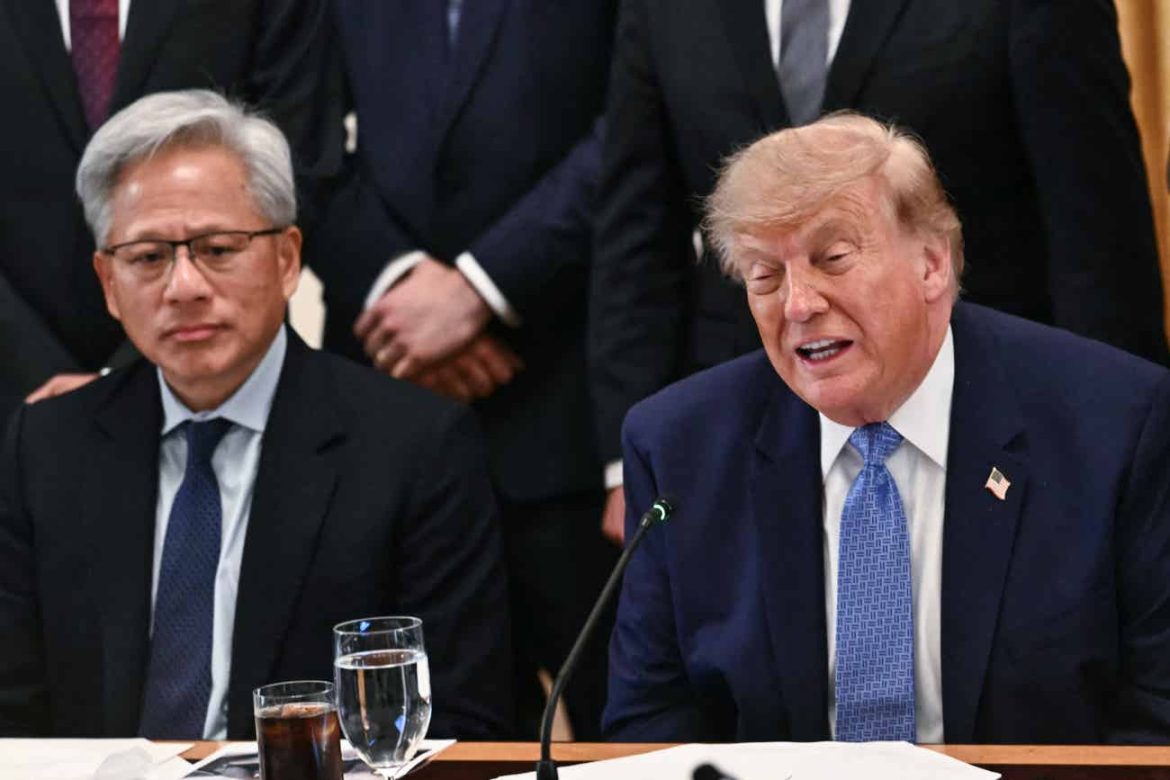
The sudden and dramatic exit of Nvidia Chief Executive Jensen Huang sent seismic shockwaves through global markets, wiping billions off tech evaluations and throwing the future of worldwide artificial intelligence supply chains into disarray. While public attention has been captivated by the sensational headlines of private indiscretions and alleged intelligence entanglements, diplomatic and policy analysts in Washington and Beijing recognize a much deeper reality. Huang’s downfall was not merely a personal scandal; it was the violent climax of a high-stakes turf war over who controls the future of global technology.
For years, Huang stood alone as an extraordinarily influential bridge between two superpowers. He had carved out direct channels to US President Donald Trump, successfully lobbying to preserve commercial pathways for advanced processors into the Chinese market while simultaneously positioning Nvidia as the undisputed backbone of America’s AI supremacy. To his supporters, Huang’s pragmatism kept Beijing tethered to Western semiconductor ecosystems. To his critics—a powerful coalition of national security hawks, defense officials, and congressional leaders—that very influence represented an unacceptable strategic vulnerability.
The Clash Over Washington’s Tech Fortress
Long before the revelations involving former associates and intelligence probes surfaced, friction lines were hardening inside the Beltway. A faction within the Trump administration viewed Huang’s direct access to the Oval Office with mounting alarm. According to former insiders familiar with internal deliberations, hawks within the administration felt that Huang wielded outsized sway over presidential trade thinking, effectively softening the blow of rigorous export control policies.
“They wanted to destroy the influence Jensen had over the president,” noted a former official involved in national security and chip policy, speaking on condition of anonymity.
As geopolitical tensions mounted and investigations into unauthorized chip diversion pipelines—such as scrutiny surrounding Singapore-based partner networks—gained traction, the political ground shifted beneath Huang’s feet. Lawmakers across the aisle seized on the climate of crisis to demand total lockdowns on advanced AI hardware transfers, accelerating legislative consensus for tighter restrictions.