By Political Bureau | New Delhi Chronicle
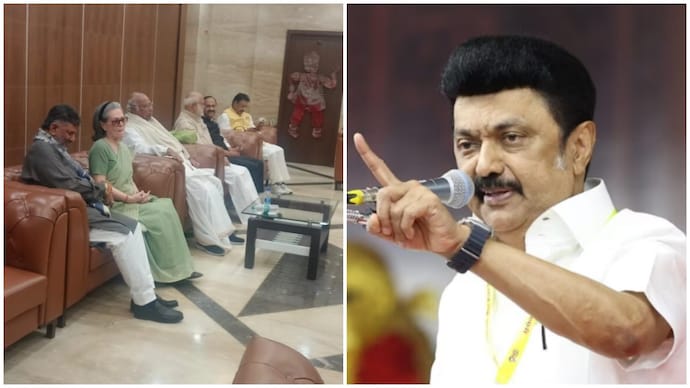
CHENNAI: Dravida Munnetra Kazhagam (DMK) chief MK Stalin on Sunday pushed back against Congress leader Rahul Gandhi’s appeal to oppose the Centre’s proposed Constitution amendment bill on delimitation, asserting that history will judge his party as “Kattabommans and not Ettappans.”
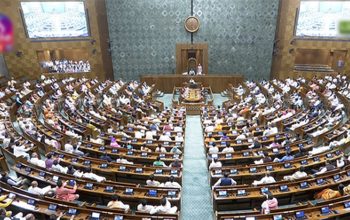
The sharp exchange unfolded ahead of a special sitting of Parliament, where the Union government plans to introduce the Constitution (132nd Amendment) Bill, 2026. The bill aims to roll out one-third reservation for women by increasing seat allocations and freezing revised boundaries until 2051.
Rahul Gandhi Urges DMK to Back INDIA Bloc Line
Earlier on Sunday, Lok Sabha Leader of the Opposition Rahul Gandhi posted on X that senior INDIA bloc leaders and he were traveling to Chennai to urge Stalin and the DMK to oppose the delimitation constitutional amendment bills.
Gandhi warned that expanding Lok Sabha seats to 850 would “finish democracy in India” and give the Bharatiya Janata Party (BJP) and Rashtriya Swayamsevak Sangh (RSS) wide latitude to redraw the electoral map to their advantage.
“Brother Stalin has always stood like a rock against anti-Tamil forces. In the national interest, in Tamil Nadu’s interest and to protect the Constitution, we have to defeat this bill together,” Gandhi wrote.
Stalin Invokes Kattabomman and Ettappan
Responding to Gandhi’s post on X, Stalin thanked the Congress leader for acknowledging the DMK’s historic role in defending the Constitution and state rights, while signaling that the DMK would act on its own assessment of Tamil Nadu’s interests.
“We have always made every decision keeping the interests of Tamil Nadu and our Tamil people as the foremost consideration,” Stalin said. “We will not compromise on this path and I’m confident that history will judge us as Kattabommans and not Ettappans.”
In Tamil history, Veerapandiya Kattabomman was an 18th-century chieftain of Panchalankurichi who fought British East India Company forces. By contrast, “Ettappan” is used colloquially in Tamil as a term for a betrayer or traitor.
Rifts Surface Within the INDIA Bloc
The exchange highlights growing strain within the opposition alliance over how to confront the legislation. On Saturday, the INDIA bloc decided to jointly oppose the bill in Parliament, arguing it could harm Scheduled Caste (SC) and Scheduled Tribe (ST) interests and weaken democratic checks.
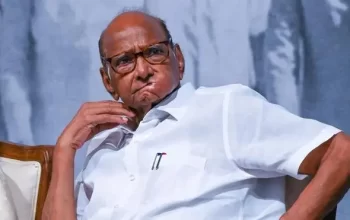
However, the DMK has announced its support for the government’s proposed bill, and the Nationalist Congress Party–Sharadchandra Pawar (NCP-SP) is also reportedly leaning toward backing it. Top opposition leaders—including Congress president Mallikarjun Kharge, Sonia Gandhi, Rahul Gandhi, and Trinamool Congress chief Mamata Banerjee—are scheduled to hold outreach meetings with Stalin in Chennai and NCP-SP chief Sharad Pawar in Mumbai on Sunday.
What the Constitution (132nd Amendment) Bill, 2026 Proposes
The Centre plans to introduce the bill in the Lok Sabha on Monday to implement one-third reservation for women by raising seat allocations across states and Union Territories and increasing state legislative assembly strength by 50 percent, before freezing both seat counts and boundaries until 2051.
Key provisions outlined for the legislation include:
Lok Sabha cap: Raising the maximum strength of the Lok Sabha to 850 members, comprising up to 815 members from states and 35 from Union Territories.
State assemblies: Raising the ceiling on state legislative assembly sizes from 500 to 650.
Boundary freeze: Locking in the revised seat allocations and electoral boundaries until 2051.
A special sitting of Parliament has been called for the week, with the Lok Sabha reconvening on November 30 and the Rajya Sabha on December 2, ahead of the session concluding on December 3.