Political Bureau, New Delhi Chronicle
October 7, 2026 | New Delhi
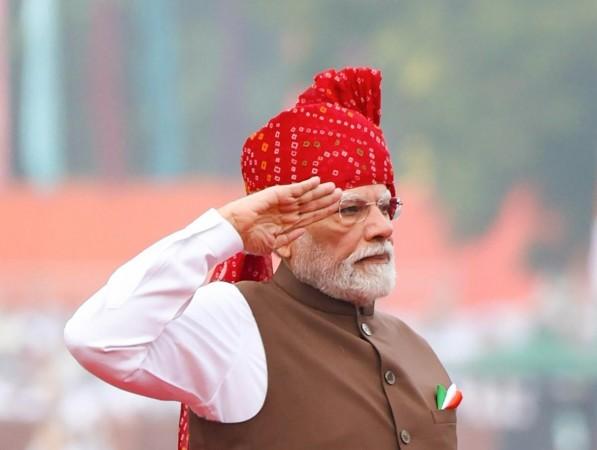
NEW DELHI — On October 7, 2001, Narendra Modi took the oath of office as Chief Minister of Gujarat for the first time. Today, October 7, 2026, marks a historic silver jubilee in Indian political history: Prime Minister Narendra Modi completes 25 uninterrupted years at the helm of executive government—spanning 13 years as Chief Minister of Gujarat and 12 years as Prime Minister of India.
Addressing the nation at the culmination of the nationwide Seva Sankalp initiatives in the capital, PM Modi reflected on his quarter-century journey as head of government, attributing the milestone to public trust and democratic resolve rather than personal ambitions.
“Today, I have completed 25 years of continuously serving as head of government,” PM Modi remarked. “This is the blessing of the people. When I took oath in 2001, I had not imagined reaching such a milestone. I lived by a mission, not personal ambition.”
Key Highlights of the Quarter-Century Milestone
Continuous Service: 25 years continuous service as head of government (2001–2026) without a break.
Gujarat Tenure (2001–2014): Served four consecutive terms as Chief Minister of Gujarat, ushering in the “Gujarat Model” of infrastructure-led development and industrial growth.
National Governance (2014–Present): Elected Prime Minister in 2014, re-elected with expanded majorities in 2019, and secured a historic third term in 2024.
Mission 2047: Reaffirmation of national targets including Viksit Bharat (Developed India) by 2047, global manufacturing leadership, and major international milestones.
From Gandhinagar to 7 Lok Kalyan Marg: A Political Evolution
Modi’s continuous quarter-century in executive power began during a crisis in 2001 when he was dispatched by the Bharatiya Janata Party (BJP) leadership to replace Keshubhai Patel following the catastrophic Bhuj earthquake. Over his 13 years in Gujarat, he established a governance blueprint centered on physical infrastructure, rapid industrialization, digital administration, and rural electrification.
In 2014, Modi transitioned to national politics, leading the BJP to its first absolute majority in the Lok Sabha in three decades. His tenure as Prime Minister transformed India’s welfare delivery mechanisms through direct benefit transfers (DBT), expanded digital public infrastructure (DPI), unified tax systems via GST, and oversaw landmark policy shifts.
The Vision Ahead: ‘We Will Do It’ and Viksit Bharat 2047
Reflecting on democratic governance, PM Modi expressed gratitude to supporters and critics alike, stating that while supporters demonstrated the power of faith, opposition taught him the strength of democratic accountability.
Looking forward, the Prime Minister emphasized that the silver jubilee of his governance journey is a launchpad for broader national goals. Reiterating the call for collective resolve, he outlined priorities including cementing India’s position among the world’s top three economies, advancing human spaceflight programs, hosting the Olympic games, and achieving a fully self-reliant economy (Aatmanirbhar Bharat) ahead of the centenary of India’s independence in 2047.