Entertainment Bureau, New Delhi Chronicle
Following the buzz surrounding his high-octane project Dhurandhar, acclaimed filmmaker Aditya Dhar is gearing up to bring one of India’s most ferocious historical icons to the silver screen. Assam Chief Minister Himanta Biswa Sarma recently revealed that he has formally approached the Uri: The Surgical Strike director to helm a grand, Hindi-language biopic on the legendary Ahom military commander, Lachit Borphukan.
The proposed pan-India project aims to introduce the monumental legacy of the Assamese warrior to global audiences. While the filmmaker has yet to issue an official announcement, the collaboration has already ignited nationwide curiosity regarding the man who successfully halted the Mughal Empire’s expansion into Northeast India.
Who Was Lachit Borphukan?
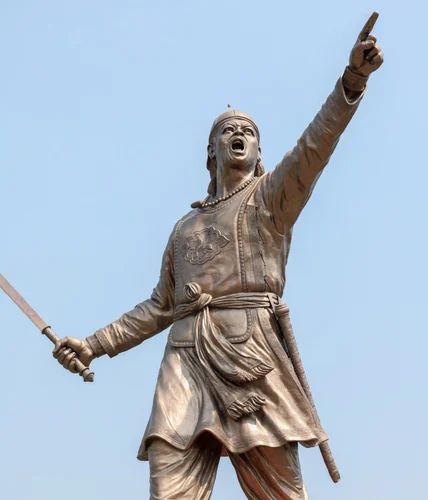
Lachit Borphukan remains a towering symbol of patriotism, military genius, and sovereign pride in Indian history. Born on November 24, 1622, in Charaideo, Assam, he was the youngest son of Momai Tamuli Borbarua, the Commander-in-Chief of the Ahom forces under King Pratap Singha.
Raised within the upper echelons of the Ahom Kingdom, Borphukan was rigorously trained in humanities, military strategy, traditional Ahom scriptures, and economic administration. This comprehensive upbringing laid a solid foundation for his meteoric rise through the state’s administrative and military hierarchies.
Before assuming the supreme military title of ‘Borphukan’—a designation reserved for the governor-commander of western Assam—he proved his mettle across various critical roles. He served efficiently as the commander of Hanstidhara Tamuli, and later as Ghura Baruah, Shimaluguria Phukan, and Dulakasharia Baruah. His unwavering discipline eventually caught the eye of King Chakradhwaj Singha, who entrusted him with the ultimate responsibility: defending Assam against external threats.
The Battle of Saraighat: Defeating the Mughals
Lachit Borphukan’s defining historical milestone came during the legendary Battle of Saraighat in 1671.
Seeking to expand his imperial borders into the Northeast, Mughal Emperor Aurangzeb dispatched a massive, heavily equipped army led by the formidable Rajput commander Raja Ram Singh. The Ahom forces were severely outnumbered and structurally outmatched in conventional open warfare.
Recognizing his tactical disadvantages, Borphukan cleverly shifted the theater of war to the treacherous waters of the Brahmaputra River, utilizing brilliant guerrilla maneuvers and brilliant naval formations.
The climax of the battle saw Borphukan severely incapacitated by illness. When a segment of the Ahom army began to lose morale and retreat, the commander famously boarded his war boat despite his failing health. His fierce declaration—that he would rather die executing his duty to his king and motherland than flee—turned the tide instantly. Inspired by his unmatched valor, the Ahom soldiers launched a devastating counter-offensive, forcing a humiliating retreat from the Mughal forces and securing Assam’s sovereignty.
An Enduring Legacy for Global Audiences
Lachit Borphukan passed away roughly a year after his historic victory in 1672 due to natural causes. King Udayaditya Singha honored his unmatched contributions by constructing the ‘Lachit Maidam’ memorial near Jorhat.
To this day, India celebrates his birth anniversary as Lachit Divas to honor his leadership and strategic brilliance. For a filmmaker like Aditya Dhar, who excels at translating intense patriotism and tactical warfare onto celluloid, this untold chapter of Indian history offers the perfect canvas for a cinematic masterpiece.