By New Delhi Chronicle News Desk
In a massive boost to regional connectivity, real estate, and economic growth, the Union Cabinet has greenlit two mega road infrastructure projects worth an estimated Rs 14,115 crore.
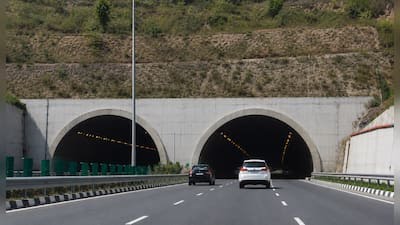
The mega development includes an 8.1-km six-lane tunnel connecting South Delhi to the Dwarka Expressway, alongside a 117.7-km access-controlled greenfield highway linking Kanpur and Kabrai in Uttar Pradesh. Together, these transformative Delhi-NCR and UP infrastructure projects aim to drastically slash travel times, reduce logistics bottlenecks, and unlock fresh economic opportunities across Northern India.
For daily commuters, the projects promise stress-free journeys. Meanwhile, for businesses and real estate investors, they mark the birth of India’s next major economic corridors.
The Six-Lane Delhi Tunnel: A Game-Changer for Commuters
Anyone who frequently travels between Dwarka, Gurugram, South Delhi, and the Indira Gandhi International (IGI) Airport knows the frustration of unpredictable traffic gridlocks. The newly approved six-lane tunnel is specifically designed to eliminate this bottleneck.
Approved at an estimated cost of Rs 6,969.67 crore under the Hybrid Annuity Model (HAM), the 8.1-km tunnel will establish seamless, uninterrupted connectivity between the Dwarka Expressway, IGI Airport, Vasant Kunj, and South Delhi.
Furthermore, the tunnel will seamlessly link with the upcoming AIIMS Mahipalpur elevated corridor. This integration will vastly improve traffic flow toward Noida, Ghaziabad, and East Delhi. Beyond easing traffic, the mega-construction is projected to generate roughly 7.54 lakh man-days of direct employment and 9.8 lakh man-days of indirect employment.
Real Estate Developers Forecast a Property Boom
Historically, infrastructure upgrades serve as a primary catalyst for real estate booms. Property markets quickly respond whenever new expressways, metro lines, or tunnels enhance accessibility. Industry experts believe this tunnel will trigger the next major real estate surge in Delhi-NCR.
“The approval of the Dwarka tunnel and the Kanpur-Kabrai highway reflects the government’s continued focus on creating high-impact infrastructure,” stated Mohit Goel, Managing Director of Omaxe Ltd. “These projects are not merely transportation upgrades; they are catalysts for urban expansion, investment, and job creation.”
Goel further emphasized that enhanced connectivity will dramatically strengthen housing demand, drive property price appreciation, and improve rental yields across the entire corridor. Consequently, the region is poised to attract a massive influx of homebuyers, commercial occupiers, and institutional investors.
Redefining Bundelkhand’s Economy: The Kanpur-Kabrai Highway
While Delhi receives an underground transit upgrade, Uttar Pradesh is set to gain a critical economic highway. The Cabinet has approved the 117.7-km Kanpur-Kabrai greenfield highway, earmarking an estimated budget of Rs 7,145.14 crore.
This access-controlled highway will operate as a vital segment of the broader Bhopal-Kanpur Economic Corridor. It will directly link the industrial hubs of Uttar Pradesh with the mining, agricultural, and manufacturing zones of Madhya Pradesh. The new route will intersect with major arterials, including NH-34, NH-35, the Bundelkhand Expressway, and the Kanpur Ring Road.
The most significant benefit of this highway is time optimization. Currently, travelling between Kanpur and Kabrai takes roughly three and a half hours. Once the new greenfield highway becomes operational, that travel time will plummet to just 90 minutes. For logistics firms and manufacturers, this translates to faster deliveries and heavily reduced freight costs.
Driving Growth Beyond Just Asphalt
Infrastructure experts emphasize that the long-term impact of these projects stretches far beyond simple commute times.
Pawan Sharma, Managing Director of the TRG Group, described the government’s move as a major breakthrough. “Big transport projects like this do more than cut down travel time; they enable a smooth flow of individuals, goods, and services, which is a fundamental aspect of economic growth,” Sharma noted.
He added that robust road networks naturally encourage the rapid development of:
• Industrial clusters and manufacturing plants
• Large-scale warehousing and logistics hubs
• Modern retail spaces, hospitality projects, and mixed-use real estate townships
Why India is Betting Big on Infrastructure
Over the past decade, India has consistently accelerated its spending on national highways to lower overall logistics costs and integrate emerging economic centers into the mainstream supply chain.
According to the National Highways Authority of India (NHAI), superior road connectivity is the backbone of supply-chain efficiency and private capital investment. These two freshly approved projects fit perfectly into India’s long-term macroeconomic strategy.
By easing pressure on Delhi’s congested arterial roads and seamlessly linking the Bundelkhand region to larger industrial consumer markets, these Rs 14,115 crore projects are set to reshape the economic geography of North India for decades to come.