New Delhi Chronicle News Desk
New Delhi | December 6
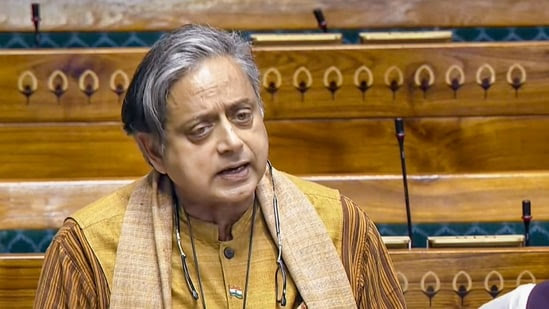
In a significant legislative intervention, Congress MP Shashi Tharoor introduced a private member’s bill in the Lok Sabha seeking to criminalise marital rape by deleting the long-standing marital-rape exception from the Bharatiya Nyaya Sanhita (BNS). His proposed amendment would ensure that non-consensual sex within marriage is treated as a punishable offence, bringing married women under the same protective legal framework as unmarried women.
Tharoor emphasised that marriage cannot override or dilute a woman’s autonomy, arguing that consent must remain central to all intimate relationships. He reiterated that society must move from a “No Means No” framework to a more progressive “Only Yes Means Yes” standard — one that recognises clear, affirmative consent between partners.
Why This Bill Is Crucial
Under the current BNS framework, sexual intercourse by a husband with his wife (aged 18 or above) is exempted from the definition of rape. Tharoor’s bill seeks to strike down this exemption, which many legal scholars and gender-rights advocates have long criticised as discriminatory and unconstitutional.
The proposed change aims to ensure that married women no longer remain “legally defenceless” when subjected to sexual violence. By removing this exemption, India would align itself with numerous countries that recognise marital rape as a criminal offence.
A Constitutional and Human-Rights Argument
Tharoor described the bill as essential for upholding constitutional guarantees of dignity, equality, privacy, and bodily integrity. He argued that the criminal justice system must evolve to recognise that marriage cannot be used as a shield for violence.
The bill clarifies that no woman’s consent can be presumed or implied on account of her marital status. It also specifies that a woman’s past conduct, profession, clothing, caste, social behaviour, or personal beliefs should never be used to infer consent.
The Debate Ahead
Criminalising marital rape has long been a contentious issue in India. Supporters argue that it is essential for guaranteeing fundamental human rights and ensuring bodily autonomy for women. Critics warn of potential misuse and argue that such provisions might disrupt the sanctity of marriage.
Because the proposal is a private member’s bill, its path through Parliament will require significant political will and social consensus. Historically, very few private member’s bills have been passed in India — but Tharoor’s initiative has reignited national conversation on marital rights, women’s safety, and legal reform.
What This Could Mean for India
If enacted, Tharoor’s bill would:
- Make non-consensual sex within marriage a punishable offence.
- Remove the marital exemption currently present in the BNS.
- Guarantee married women equal protection under the rape laws.
- Strengthen India’s global position on gender justice and human rights.
While the bill’s passage remains uncertain, it marks a significant moment in India’s ongoing conversation about consent, equality, and modernisation of the legal system.