By Digital Desk, New Delhi Chronicle Published: March 5, 2026
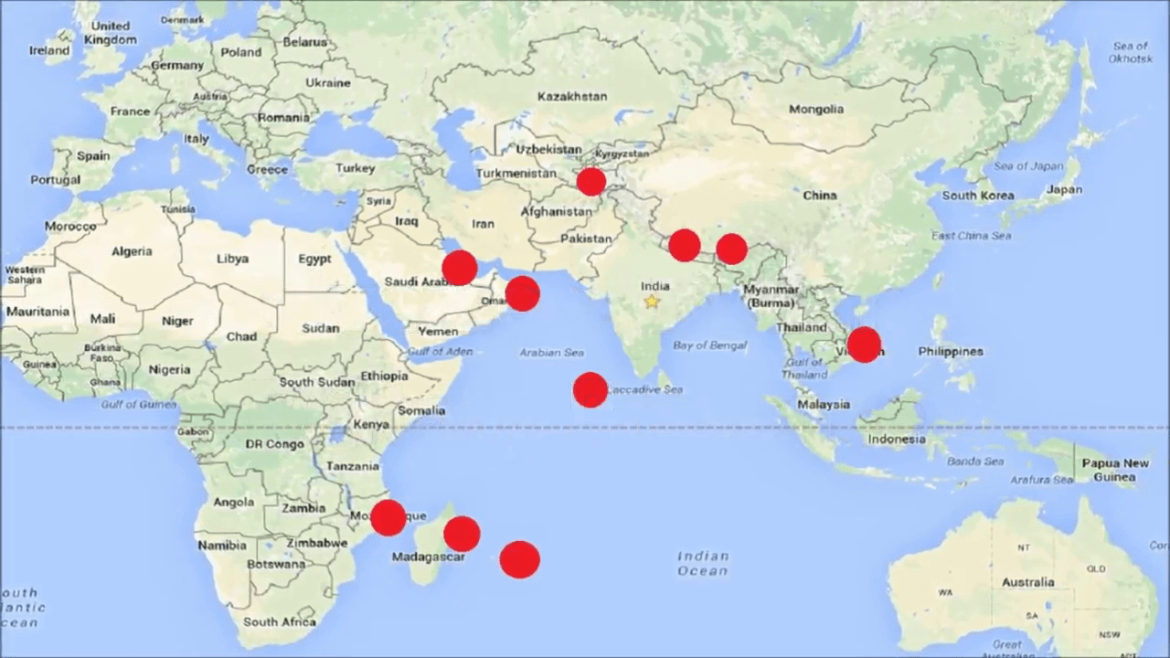
As the geopolitical tides of the Indo-Pacific shift, New Delhi is no longer content with just guarding its own coastlines. In 2026, India’s “Necklace of Diamonds” strategy has evolved from a theoretical concept into a tangible network of runways, listening posts, and logistics hubs stretching from the Horn of Africa to the gates of Southeast Asia.
While India officially maintains a policy of “non-alignment,” its growing list of overseas facilities tells the story of a rising maritime power securing its energy lanes and countering regional rivals.
The Crown Jewel: Agaléga, Mauritius
The most significant leap in India’s overseas presence is the fully operational facility on Agaléga Island. Inaugurated in 2024 and expanded through 2025, the 3,000-meter airstrip and deep-water jetties now host Indian P-8I Poseidon aircraft.
“Agaléga isn’t just a base; it’s a permanent eyes-and-ears outpost in the Southwest Indian Ocean,” says a former naval attache. “It allows the Indian Navy to monitor the Mozambique Channel—a critical chokepoint for global shipping.”
The West Asian Anchor: Duqm, Oman
Oman remains India’s most enduring defense partner in the Middle East. Through a 2018 agreement that has reached full maturity this year, the Indian Navy enjoys logistics and support access at the Port of Duqm. This allows Indian destroyers to maintain a persistent presence near the Strait of Hormuz without the need to return to Mumbai for refitting.
Central Asia: The Tajikistan Shift
While India’s physical presence at the Ayni and Farkhor Air Bases in Tajikistan saw a drawdown in late 2025 due to shifting regional dynamics, New Delhi maintains “technical footprints” in the region. These facilities remain vital for intelligence gathering along the Wakhan Corridor and monitoring the security vacuum in neighboring Afghanistan.
The “Listening” Network: Radar and Surveillance
India’s strategy relies heavily on “Maritime Domain Awareness” (MDA). Rather than large troop deployments, India has installed a chain of Coastal Surveillance Radar (CSR) stations across:
• Seychelles (Assumption Island): Tracking piracy and illegal fishing.
• Madagascar: A high-tech listening post monitoring the southern Indian Ocean.
• Maldives: Despite past political turbulence, technical cooperation on radar data sharing remains a quiet pillar of regional security.
Why the “Necklace of Diamonds” Matters
For decades, analysts pointed to China’s “String of Pearls”—a series of ports from Gwadar to Djibouti—as a threat to Indian sovereignty. Today, India’s response is a more integrated, “light-footprint” approach.
By securing reciprocal logistics agreements with the United States (LEMOA), France, and Japan, India has gained “virtual” access to bases like Diego Garcia and Reunion Island, effectively tripling its operational reach without the political baggage of traditional colonization.
The Bottom Line
As we navigate 2026, India’s overseas military presence is characterized by partnerships over possession. These outposts are the silent sentinels of India’s $5 trillion economy, ensuring that the “Indian” Ocean remains more than just a name.