New Delhi Chronicle News Bureau
New Delhi | 22 December
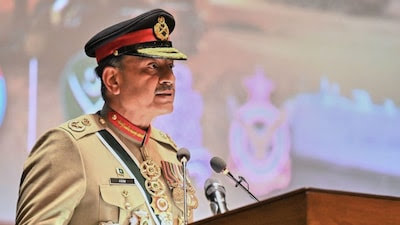
a rare and startling public admission, Pakistan’s top military commander has implicitly acknowledged that Operation Sindoor inflicted serious damage on Islamabad’s military posture. Pakistan Army Chief Asim Munir claimed that during the intense four-day conflict triggered by India’s military offensive in May, his forces were saved not by battlefield superiority but by what he described as “divine intervention.”
Speaking at a National Ulema Conference in Islamabad, Munir invoked a Quranic verse stating that no force can prevail if God provides help. “We felt it,” he said, referring to what he portrayed as unseen assistance during the conflict that followed India’s launch of Operation Sindoor.
India’s Retaliation After Pahalgam Terror Attack
The hostilities erupted after a brutal terror attack in Pahalgam, Jammu and Kashmir, in April 2025, which claimed the lives of 26 Indian civilians. The attack prompted New Delhi to launch precision military strikes targeting terrorist infrastructure and key strategic installations across Pakistan and Pakistan-occupied Kashmir.
India’s operation was marked by speed, accuracy and strategic clarity, with officials indicating that the strikes caused substantial damage to Pakistan’s military assets and terror networks within a short span of time.
Heavy Losses Forced Pakistan to Seek De-escalation
Indian military assessments indicated that Pakistan suffered significant casualties, including loss of personnel, damage to air assets and disruption of forward deployments. Officials stated that the imbalance on the battlefield compelled Islamabad to seek a cessation of hostilities by May 10.
Despite these losses, Pakistan’s establishment initially avoided acknowledging the scale of the setback. Munir’s comments are now being interpreted as an indirect admission that the situation slipped beyond the army’s control during the conflict.
Religion as a Shield Against Domestic Criticism
Analysts believe Munir’s reference to divine intervention is aimed at reframing the outcome domestically — shifting focus away from strategic and operational failures. By attributing survival to faith rather than military strength, the Pakistan Army appears to be attempting to preserve institutional credibility and morale amid growing internal scrutiny.
The remarks also underscore the military’s continued reliance on religious symbolism to consolidate support at home, especially at a time when questions are being raised about leadership decisions and preparedness.
Operation Sindoor’s Strategic and Psychological Impact
Operation Sindoor, named after a symbol of strength and resolve in Indian culture, has emerged as a defining moment in the current phase of India-Pakistan relations. Beyond its military success, the operation delivered a psychological blow by forcing Pakistan’s leadership into an unusually candid public posture.
As regional observers note, Munir’s remarks have ensured that the legacy of Operation Sindoor will be remembered not just for India’s decisive action, but also for Pakistan’s extraordinary claim that only divine intervention prevented a far greater defeat.